The Everlasting by Alix E Harrow
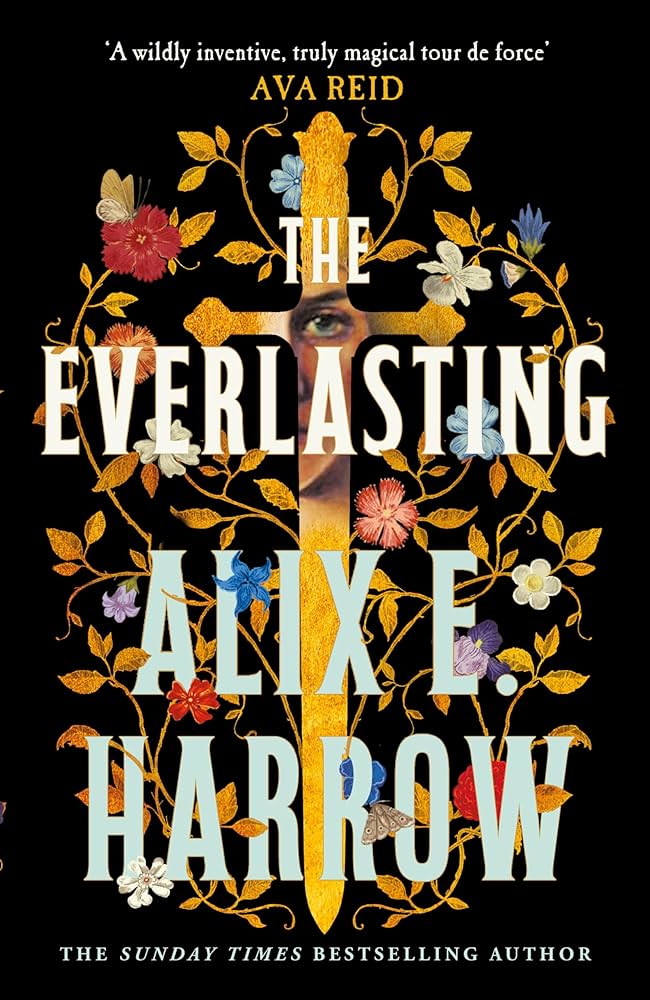 I have never been so happy that I've read The Faerie Queene. Genuinely, those dreadful weeks where I sat trying to understand how I could turn that story into an essay or topic of substance were all worth it because having that backdrop whilst I read this story definitely made the experience ten times better. A huge part of my struggle with The Faerie Queene was that it functioned exactly as Spenser wanted it to. He wanted to write a mythology of England that would set the tone for a patriotic, nationalist future and he succeded. It was, and still is at points, quite boring to me. But this book was so so good!!!
There's almost too much to think about even though it wasn't a long story at all. I also read The Six Deaths of the Saint which was the short story that catalyzed this one and I definitely prefer the direction that Harrow went in The Everlasting, mostly because it was focused on the violence of actually myth making a nation as opposed to the trauma of enacting violence (not uninteresting but was folded into Una's character enough that it didn't need to be the main focus)
The Farseer Trilogy by Robin Hobb
 I have never been so happy that I've read The Faerie Queene. Genuinely, those dreadful weeks where I sat trying to understand how I could turn that story into an essay or topic of substance were all worth it because having that backdrop whilst I read this story definitely made the experience ten times better. A huge part of my struggle with The Faerie Queene was that it functioned exactly as Spenser wanted it to. He wanted to write a mythology of England that would set the tone for a patriotic, nationalist future and he succeded. It was, and still is at points, quite boring to me. But this book was so so good!!!
There's almost too much to think about even though it wasn't a long story at all. I also read The Six Deaths of the Saint which was the short story that catalyzed this one and I definitely prefer the direction that Harrow went in The Everlasting, mostly because it was focused on the violence of actually myth making a nation as opposed to the trauma of enacting violence (not uninteresting but was folded into Una's character enough that it didn't need to be the main focus)